

Wood is the oldest building material and the current best answer
It stores carbon, insulates 400 times better than steel, flexes in an earthquake instead of cracking, and beats structural steel on strength for weight. The numbers hold up.
Seismic tested at UBC, with FPInnovations
Pacific Homes sent the SmartWall to the University of British Columbia, with support from FPInnovations, to be compared against conventional wood walls under earthquake loading.
The SmartWall performed significantly better under seismic activity than conventional construction. On a company selling into British Columbia, Washington and Alaska, that matters as much as any energy number.
Read the seismic test reportThis is the third independent test on the assembly. RDH Building Science measured the effective R-value, Enertech Solutions tested a completed house against the BC Energy Step Code, and FPInnovations covered seismic. The wall data and the Step Code result.
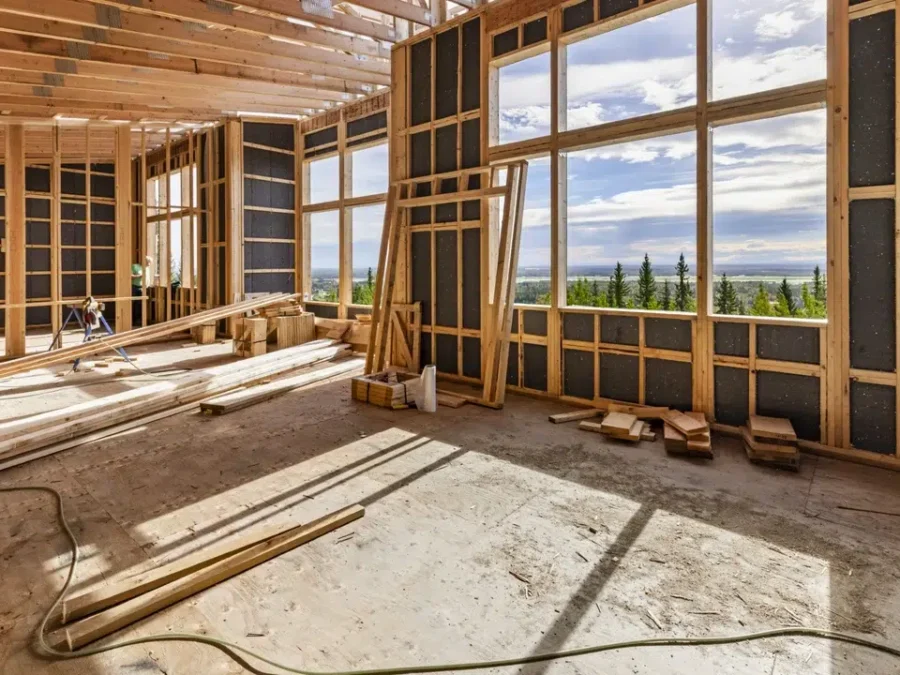
Three numbers worth knowing
Wood is a natural insulator because of the air pockets in its cellular structure, and those same pockets absorb sound.
A SmartWall goes further again, because the insulation is routered into the framing rather than stuffed between it. RDH Building Science measured effective R-21.1, R-27.1 and R-33.9 depending on wall depth, against roughly R-13 for a conventional 2x6 batt wall.
Five arguments, all of them checkable
It stores carbon rather than emitting it
Trees absorb carbon as they grow and wood products keep storing it. So choosing timber both produces less carbon dioxide during manufacture and holds carbon already taken out of the atmosphere.
Where wood is responsibly sourced, replanting continues the cycle: new trees grow and absorb more. Timber production also carries a considerably lower carbon footprint than concrete, brick or steel.
It flexes where other materials crack
Wood's structural flexibility makes it far less likely to fail under earthquake loading. Brick and concrete are denser and more rigid, so tremor waves crack them; timber absorbs and dissipates the same movement.
That is the general case for wood. The specific case for this wall is the FPInnovations testing at UBC above.
It beats structural steel on strength for weight
Radiata Pine structural timber has a strength-to-weight ratio around 20% higher than structural steel, and performs four to five times better than unreinforced concrete in compression. Modern preservatives also mean it lasts longer than has previously been possible.
It saves money through time rather than material
The significant saving in building with wood is speed. Timber goes up fast, particularly with prefabricated components, which shortens the period the structure is exposed to weather before the roof is on. That protects the building as well as the budget.
Wood is also forgiving. An error on site can often be adjusted in place rather than needing the lengthy and expensive remedy other materials demand.
People simply prefer it
Research by Planet Ark found 96% of people describe wood as visually appealing, and a clear majority also consider it versatile, recyclable, renewable and long lasting.
There is measurable evidence beyond preference. Increased use of wood in a room has documented physiological and psychological effects: workers report less stress and greater productivity, students learn better, patients recover faster.
That is a soft argument next to compression ratios, and it is also the one you live with every day. Timber accents can be cosmetic, hybrid or fully structural depending on what the house needs.
Building with wood
Better than denser materials, because it flexes. Brick and concrete are rigid and can crack under tremor waves, while wood absorbs and dissipates the movement. Pacific Homes sent the SmartWall to the University of British Columbia, with support from FPInnovations, to be tested against conventional wood walls under seismic loading. The SmartWall performed significantly better than conventional construction.
Very well, because of the air pockets in its cellular structure. Wood insulates roughly 15 times better than concrete or brick and about 400 times better than steel. Those air pockets also absorb sound, which is why a timber house tends to be quieter than a comparable one built in masonry.
Radiata Pine structural timber has a strength-to-weight ratio around 20% higher than structural steel, and performs four to five times better than unreinforced concrete in compression. In 2016 the University of British Columbia completed Brock Commons, an 18 storey student residence and at the time the tallest timber building in the world.
Substituting one cubic metre of timber for one cubic metre of concrete avoids roughly one tonne of carbon dioxide. Timber production also carries a considerably lower carbon footprint than concrete, brick or steel, and the wood itself stores carbon absorbed while the tree was growing.
Mostly through time rather than material cost. Timber goes up faster, which shortens the period a building is exposed to weather before the roof is on. Brock Commons was erected in nine weeks using prefabricated components and finished four months ahead of conventional expectations. Wood is also forgiving: an error can often be adjusted on site rather than needing a costly remedy.
Related pages
Ask what the wall does on your site.
Seismic zone, snow load, energy target. A Build Specialist can tell you what the assembly needs to be for your location, and we can share the RDH, Enertech and FPInnovations reports.