
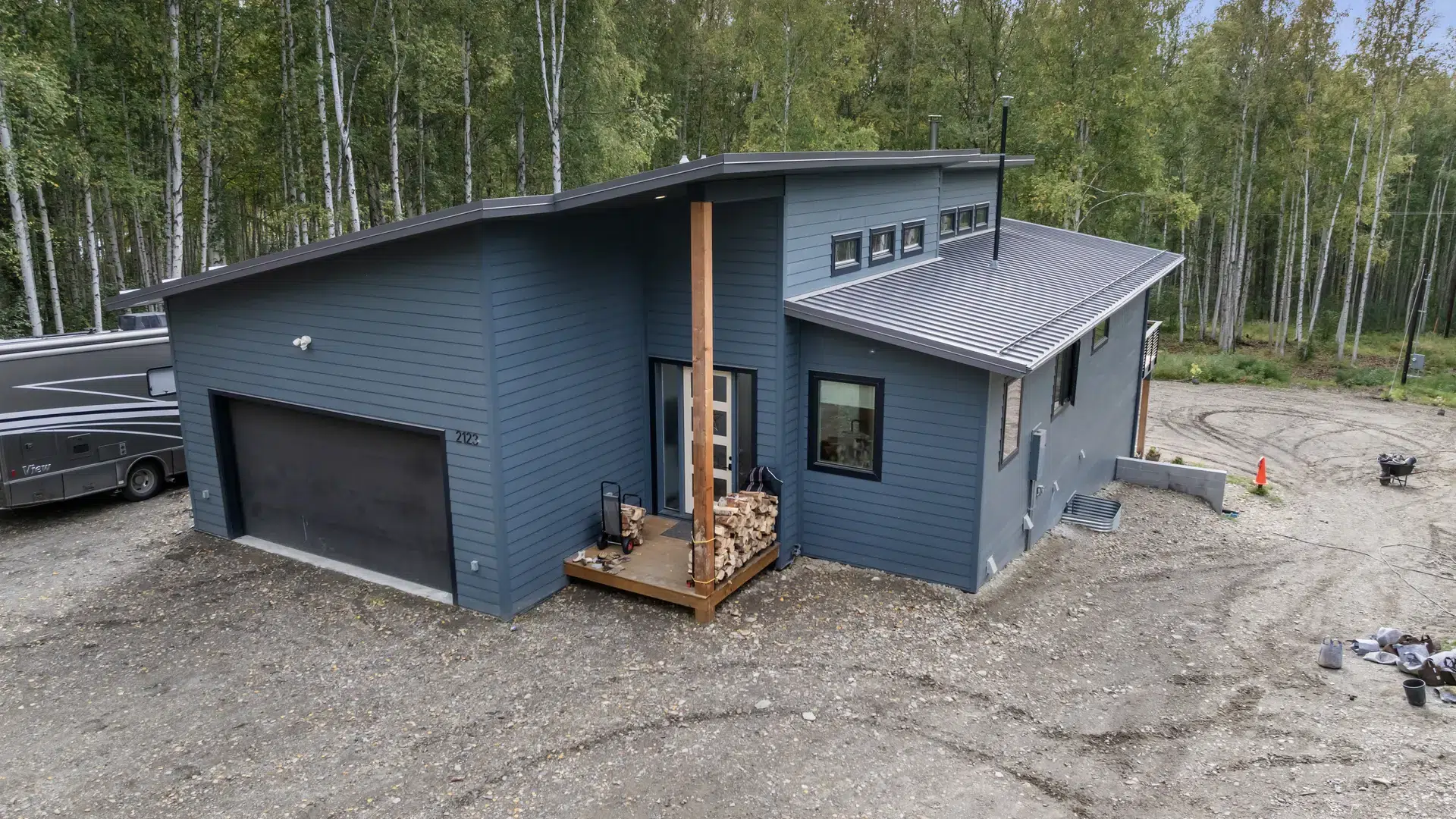
Alaska prefab homes, tested at forty below.
Custom prefab and panelized packages delivered from Anchorage to the Interior and out to sites with no road at all. Manufactured indoors, engineered for arctic conditions, and assembled by a contractor network that has put our packages up in Alaska for decades.
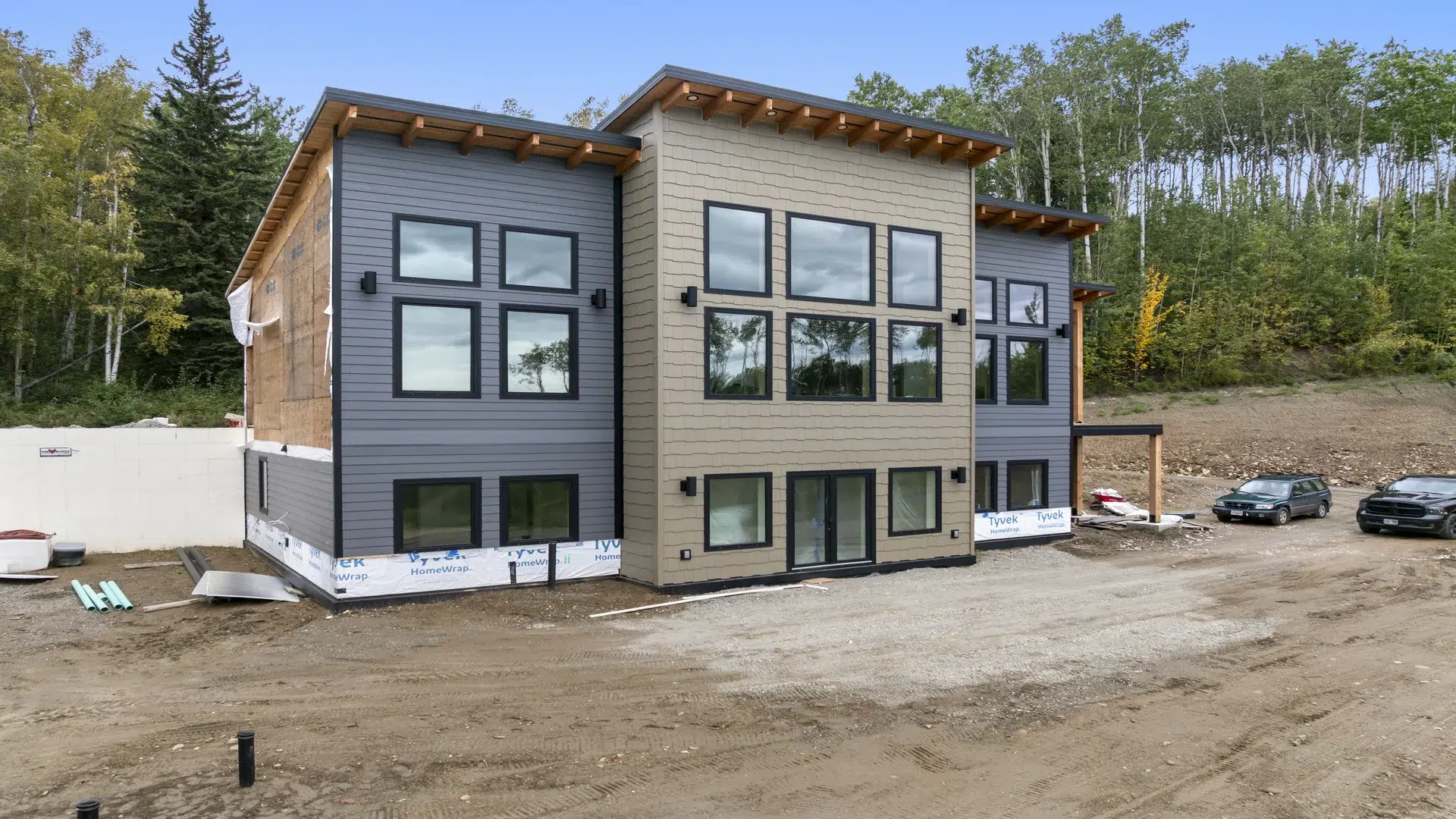
The season is short and the mistakes are expensive
Alaska gives you a narrow prime building window and a winter that punishes anything left standing open. Every week a frame is exposed is a week of risk, and getting a crew back to a remote site to fix something is a different order of expense than it is on the road system.
Because the walls, trusses and floor system are manufactured indoors to exact specification, the weather stops mattering to most of the build. Deliveries arrive as a sequence of loads, our contractor network assembles the shell in days rather than months, and you spend the season finishing rather than framing.
Searching manufactured homes?
Manufactured, modular and panelized are three legally distinct things, and the category decides your permitting path, your financing and where you are allowed to build. Pacific Homes builds panelized packages: components manufactured off site, assembled on your foundation, treated as a site-built home. The full comparison, including financing and title.
Cold, seismic, and a long way from a lumber yard
Three things shape an Alaska package: how cold it gets, how much the ground moves, and how hard the site is to reach. All three are engineered before anything is cut.
Envelope built for arctic temperatures
Wall depth is specified to your heating degree days rather than fixed. The deeper 2x8 and 2x10 configurations exist for exactly this, at effective R-27.1 and R-33.9 measured by RDH Building Science against roughly R-13 for a conventional 2x6 batt wall.
Seismic design
Much of Alaska carries serious seismic exposure and the structural engineering accounts for it rather than treating the state as one zone.
Snow and wind loads by borough
Ground snow load and design wind speed set for your specific location, which varies enormously between Southeast, Southcentral and the Interior.
Delivery to sites without road access
Packages ship as sequenced truckloads, and beyond the road system by barge or air. Flat panels travel where finished modules cannot, which is what makes remote Alaska building practical rather than punishing.
The wall is the whole argument here
In a climate that reaches forty below, every stud running from the warm side to the cold side of a conventional wall is a path for heat to escape. Insulation routered into the framing removes those bridges, and the airtight assembly keeps conditioned air inside where the fuel bill paid to put it.
Panels were tested for a full year at BCIT's Cold Weather Testing Facility, showing superior energy efficiency and reduced moisture buildup against conventional walls. That second point matters as much as the first in a climate with a hard, sustained freeze.
"Our house is performing stellar in the abnormally long stretch of cold weather we have had, minus 40 to minus 50 for the last couple of weeks. All our neighbours have been coming over for the holidays and commenting on how we have no frost build up around the windows."Jeff and Sarah, Fairbanks. More from owners
Where a Alaska budget goes
Your package price is locked before construction starts, which removes the largest variable from the budget. Land, foundation, services, permits and assembly labour are quoted locally by your builder. Your package is manufactured in Canada, so a US dollar budget goes further than with a domestic manufacturer.
Where packages go
Packages ship from our facility in Cobble Hill, British Columbia, and we have been delivering internationally since 1989. No site is too remote.
Anchorage and Southcentral
Our most common Alaska destination. City lots, the Valley, and everything along the road system.
Fairbanks and the Interior
The coldest building in the state and where the envelope earns its cost most obviously. Deep wall configurations are the norm rather than an upgrade.
The Kenai Peninsula
Soldotna, Kenai and Homer, including lakefront and coastal builds with real wind exposure.
Southeast Alaska
Juneau, Sitka and the island communities, where marine access and driving rain shape both the delivery and the detailing.
The Mat-Su Valley
Palmer, Wasilla and acreage building through the fastest growing part of the state.
Off the road system
Barge and air-accessible sites. Flat-pack panels and sequenced loads are what make these builds possible at a sane cost.
What buyers here ask
Kit home, prefab package and panelized package all describe the same thing: a complete set of engineered components manufactured off site and assembled on your foundation by a licensed local builder. It is not a manufactured home on a chassis and it is not a modular home shipped as finished boxes. Because the house is completed on site under the same permitting and inspection process as any custom build, the finished home is treated as a site-built home.
The package is one part of the total. Your building package price is locked in before construction begins, which removes the largest variable from the budget, while site costs such as land, foundation, services, permits and local labour vary locally and are quoted by your builder. A practical way to size a project early is to divide your total budget by the going cost per square foot in your area. American buyers also benefit from paying for a Canadian-manufactured package, which stretches a US dollar budget further.
A licensed local builder or contractor of your choosing. We manufacture and deliver the package with complete assembly documentation, and our team stays available for technical questions through construction. If you do not have a builder yet, we can point you toward contractors who have assembled our packages before.
Yes. Panelized packages ship flat on standard trucks rather than as finished three dimensional boxes, so they travel where modular homes cannot. That makes island properties, acreages and sites with limited road access workable. We plan the logistics for your specific site, including access roads and ferry routes.
As a sequence of truckloads from our facility on Vancouver Island, planned so components arrive in assembly order rather than as one pile to sort through. For sites off the road system, packages continue by barge or air. Because panels ship flat rather than as finished three dimensional modules, far more house fits in each load, and there is no oversize permit or restricted route to work around. Tell us the access and we plan the logistics to it.
From an 800 square foot cabin to a 4,000 square foot house and beyond. The same wall system, engineering standard and package contents apply at either end, so a small remote cabin gets the same envelope performance as a large lakefront home. Bring your own floor plan, choose one of ours, or work with our design team on something new.
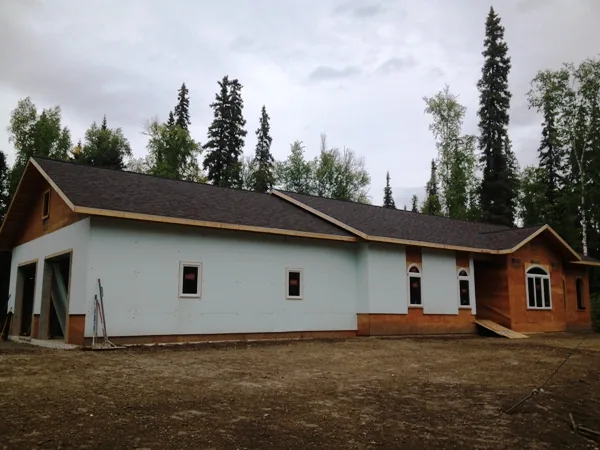
Built in Alaska
From Anchorage to the interior, panelized packages engineered for Alaskan winters and shipped north.
 Fairbanks
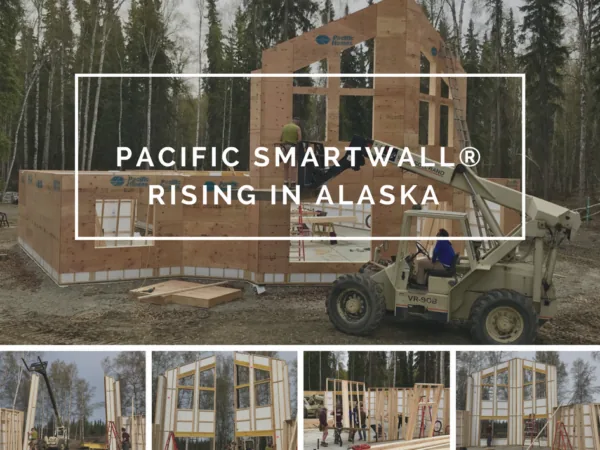
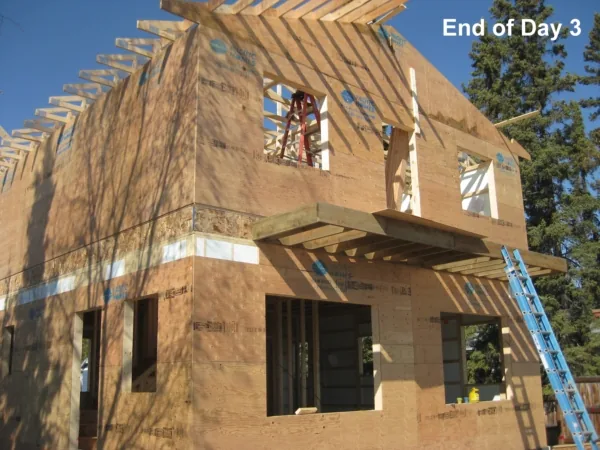
Pacific SmartWall® Rising in Alaska
Located in Fairbanks, Alaska, this 2720 square foot home is quickly coming together. Our Pacific Home Building Package arrived recently and before long the walls were already going up!
 Fairbanks
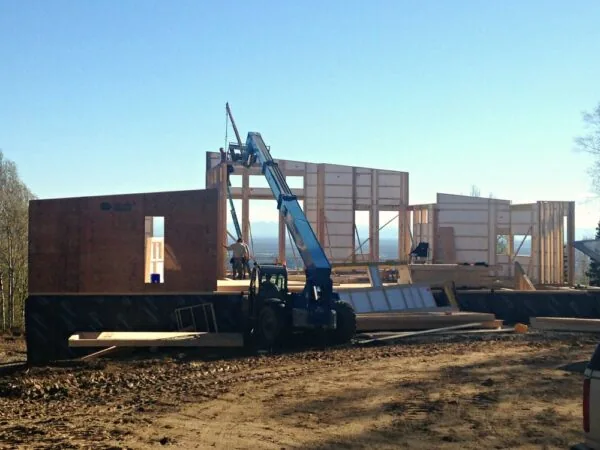
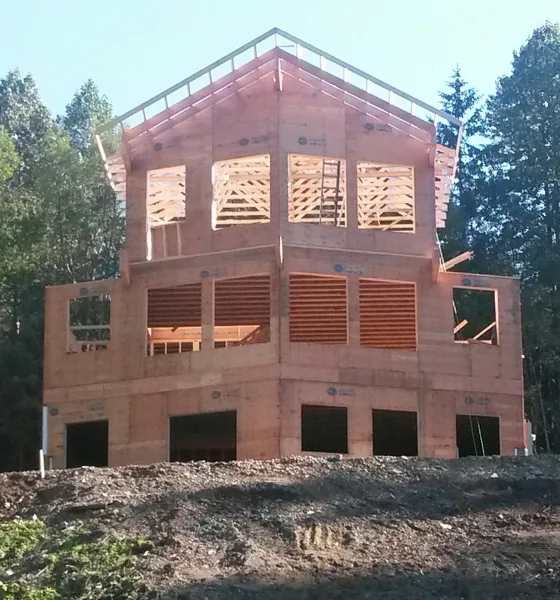
Pacific SmartWall® Views from Alaska!
Check out the amazing views of our Pacific SmartWall® System being erected near Fairbanks, AK. This modern contemporary design exemplifies the great outdoors and the heart of living in Alaska. The owner's objective was simple to take advantage of the unobstructed views!
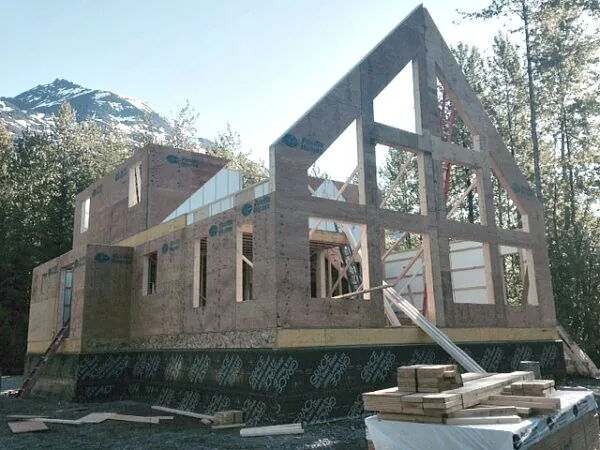 Valdez
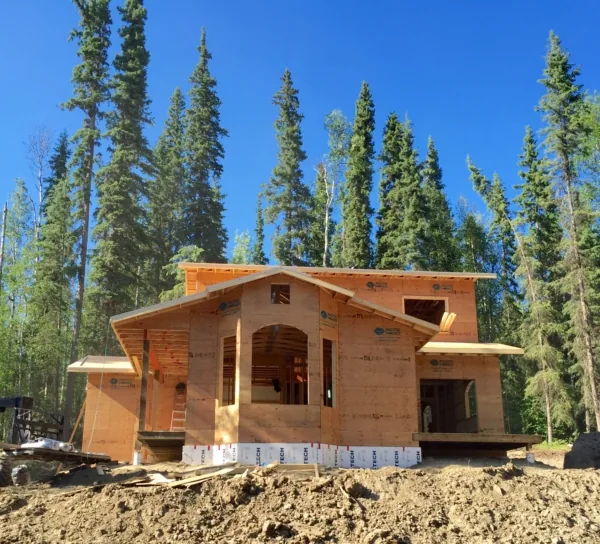
Custom Designed Prefab Cottage in Valdez, AK
A custom designed cottage raised quickly on 2x8 Pacific SmartWall panels, specified for an Alaskan climate.
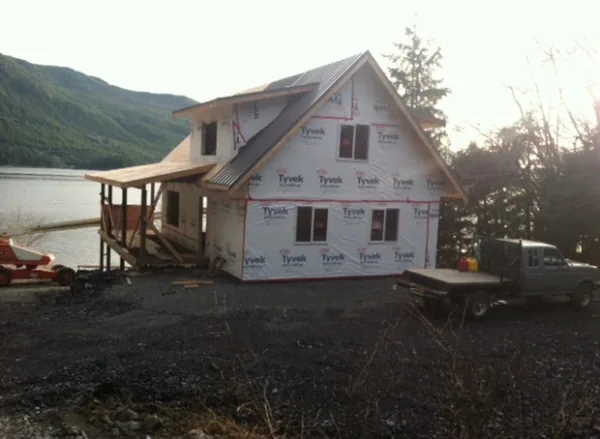
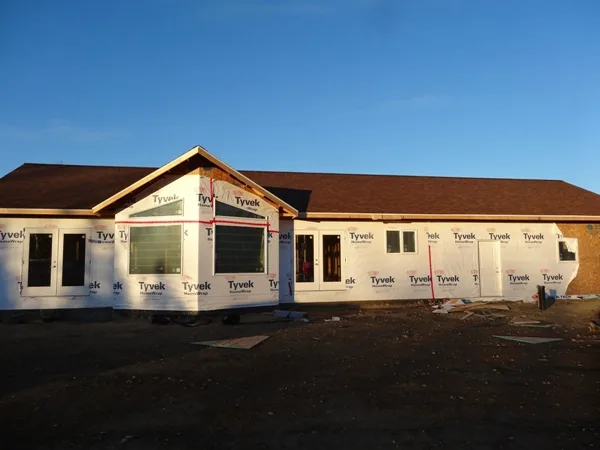
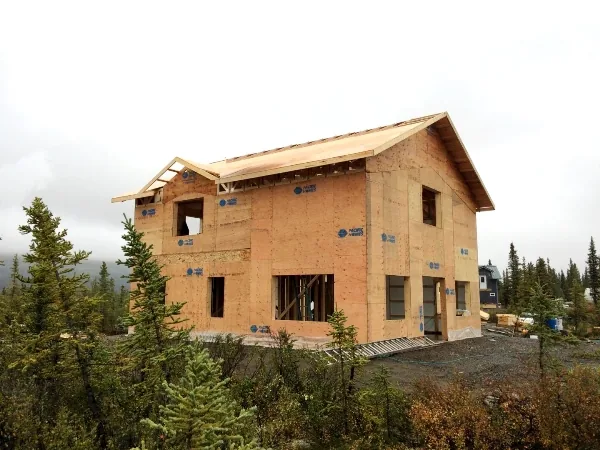
From the build archive across Alaska:

Related pages
Tell us about your Alaska lot.
Send us your location, your rough budget and a plan if you have one. Your Build Specialist will come back with what a Pacific Homes package looks like on your property, engineered for your local loads. Our plans or yours, we build them all.