
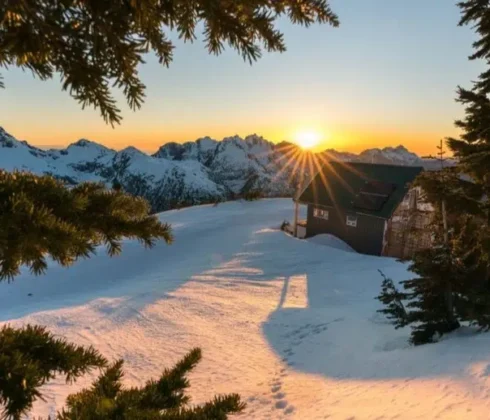
Winter is the season nobody competes with you for
Which is most of the argument. Fewer builds mean contractors are easier to book, permits move faster, and the part of the process most affected by weather happens indoors anyway.
Yes, and there are advantages people do not expect
Most people asking assume winter is something to work around. With a panelized package it is closer to the opposite: manufacturing happens indoors in a climate controlled facility regardless of the season, so the part of a build most exposed to weather is not exposed at all.
What genuinely changes is the site work, and that is worth planning rather than avoiding.
Three things that are better in winter
Two of them exist purely because far fewer people are building at the same time as you.
Trades are easier to book, and often cheaper
Contractors and subcontractors are looking for work through every season, and in winter there is considerably less of it around. That makes qualified trades easier to get hold of and frequently less expensive than the same people would be in July.
On a full build that difference can go a long way, whether toward furnishing the house or toward something you had cut from the plan.
Permits move faster through a shorter queue
A local building authority processing fewer applications turns them around more quickly. That matters more than it sounds: permit processing is the single most common cause of delay on any build, and it is the part nobody can hurry from the outside.
A season where the queue is shorter is worth real weeks.
You move in sooner, for two reasons
The obvious one is that starting in winter means not waiting for spring. The less obvious one is that the build itself tends to move faster, because both of the above compound: trades available when you need them, and a permit that did not sit in a queue.
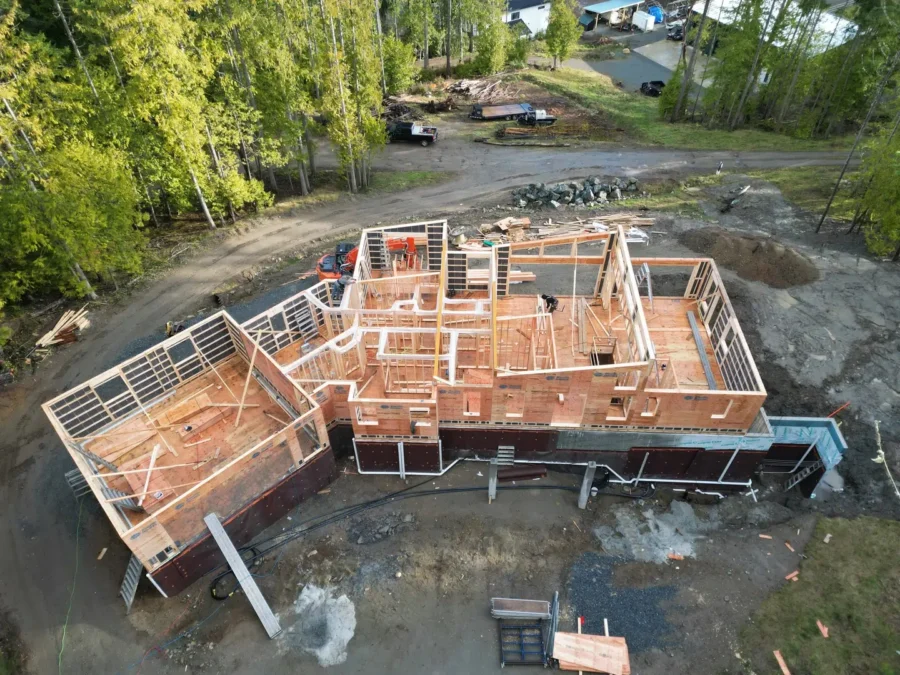
Your lumber never sees the weather.
In stick built construction, framing in rain and snow poses a real problem. Wood that gets too wet warps, and in the wrong conditions it starts to grow mould. Both affect the structural integrity of the house, and neither can be corrected afterwards.
Panelized components are built in a climate controlled facility where the wood is protected from precipitation and stays protected until delivery. The frame that goes up on your foundation has never been rained on, in any season.
That consistency is worth more in winter than at any other time of year. How the panels are made.
What winter does make harder
None of this is a reason not to build. It is the part to plan around rather than discover, and a Build Specialist will raise all of it before you commit to a date.
Foundations and frozen ground
Concrete cannot be poured into frozen ground without additional measures such as ground thawing, insulated blankets or heated enclosures. All are routine, all cost something, and all need scheduling rather than improvising.
Excavation and site access
Digging is harder in frozen or saturated ground, and snow can limit access to a remote or steep site. On a mountain or backcountry lot this is the thing to check first, because it decides when deliveries can arrive.
Heating the shell for finishing
Once the building is closed in, interior trades need it heated for drywall, paint and flooring to cure properly. Temporary heat is normal on a winter build and belongs in the budget rather than arriving as a surprise.
Daylight hours
A short northern day limits how much site work fits into it. Less of an issue on a panelized build, where the shell goes up in days rather than weeks, but it still affects the site work either side.
Winter building questions
Yes, and with a panelized package there are advantages to it. Manufacturing happens indoors in a climate controlled facility regardless of the season, so the part of the build most affected by weather is not affected at all. Site work still is, which is the part worth planning around.
Often, for a simple reason: far fewer people are building at the same time as you. Contractors and subcontractors are still looking for work through every season, so qualified trades are easier to book and frequently cost less than they would in July. On a full build that difference can be meaningful.
Usually, and for the same reason. A local building authority processing fewer applications tends to turn them around more quickly. Permit processing is the most common cause of delay on any build, so a season where the queue is shorter is worth something.
In stick built construction it can. Wood that gets too wet warps and in the wrong conditions grows mould, and both affect the structural integrity of the house. Panelized components are built in a climate controlled facility and stay protected until they are delivered, so the frame that goes up on your foundation has never been rained on.
Site work. A foundation cannot be poured into frozen ground without additional measures, excavation is harder, and access to a remote or steep site can be limited by snow. Finishing trades also need the building heated once it is closed in. None of that is a reason not to build in winter, but it is the part to plan around rather than discover.
Related pages
Ask what a winter start would actually look like.
Tell a Build Specialist where you are building and roughly when. They will tell you what the season means for your site, your foundation and your permit queue, and design, estimating and engineering are included in the package.